
Found for the service,not the shop name.
Drivers search the job. Automotive search work builds the pages that answer those jobs in your city, keeps the map listing consistent with them, and tracks which page produced the call.
From a searchto a booked bay.
Search work only matters where it touches this sequence. Every stage below is either working in the shop today or quietly losing jobs.
A driver searches a service
Someone types the service and the vehicle, not your shop name. Ceramic coating, front bumper PPF, windshield tint, a full wrap on a specific truck.
A page has to match it
The result they open needs to be about that service in this city, with the vehicles you accept, how the work is quoted, and finished examples.
The shop has to look current
Map listing, hours, service list, photos, and reviews are compared before a call. When those disagree with the site, the visit ends there.
The inquiry has to be countable
Calls, forms, and directions requests are tracked to the page that produced them, so search work is judged on booked jobs instead of impressions.
Three kinds of intent, three kinds of page.
Service and vehicle intent
Each service gets one page that owns its language, so a paint protection film search and a window tint search do not compete for the same URL.
Local intent
City and neighborhood relevance is built through real service pages, the map listing, and consistent business details, not a list of towns pasted into a footer.
Comparison intent
Packages, coverage options, and what changes the price are written plainly, because a driver comparing shops is reading for the answer you left out.

The unglamorous half.
Most of the durable gain in automotive search comes from work nobody screenshots.
Page titles and headings that read as the service, not the brand
Internal links from the shop's own related services and articles
Speed and mobile behavior on the pages that receive search traffic
Structured data for the business, services, and reviews where legitimate
Google Business Profile categories, services, hours, and current photos
Reporting ties calls and form submissions to the page and source that produced them. If follow-up on those inquiries is the weak point, that is a separate installation: lead capture and follow-up.
Automotive search work in Las Vegas.
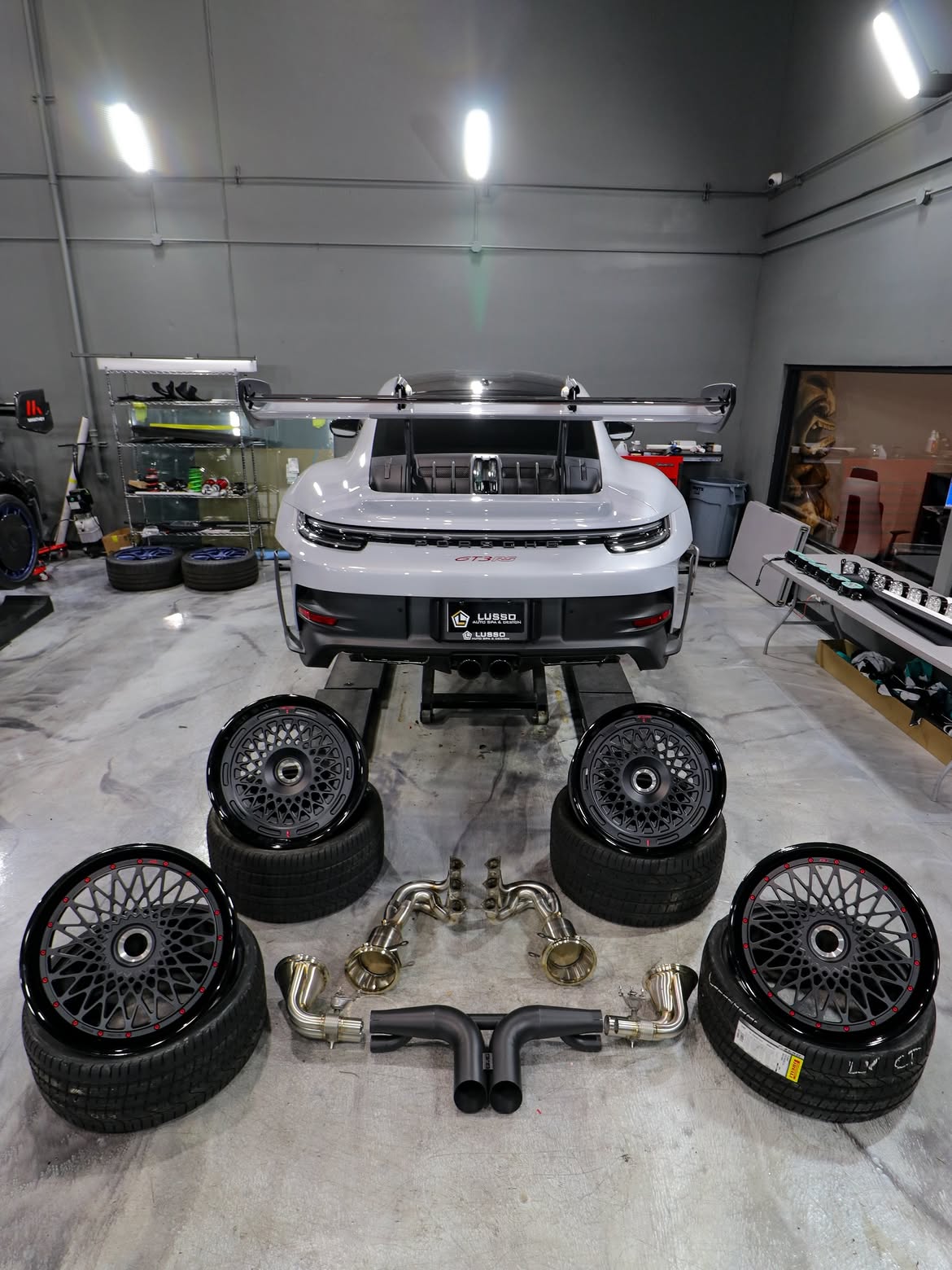
Lusso Auto Design runs website, content, and digital work with Cross X Agency, with service pages carrying the shop's own builds rather than borrowed imagery. Local search work is also live for shops outside automotive, including Versatile Coatings Hawaii.
Search is one lane.
Search earns the visit. The site has to hold it, content keeps the shop credible between visits, paid media buys volume when the calendar has room, and follow-up decides whether an inquiry becomes a booked job.
Before you buy.
How long before we see a change?
Technical and on-page work lands immediately and is visible in the site itself. Movement in search results and inquiry volume is usually measured across months, not weeks, and no specific ranking or traffic outcome is promised.
Do you need to rebuild our site first?
Not always. If the current platform can carry proper service pages, headings, and a quote path, search work happens on the site you already own. A rebuild is only recommended when the structure cannot support it, and it is scoped separately as automotive web design.
Do you handle the Google Business Profile?
Yes. Categories, services, hours, description, and photo updates are treated as part of local search, because the map listing is often the first thing a driver reads about the shop.
How do we know search is producing work?
Calls, form submissions, and directions requests are tracked to the page and source that produced them, then reported against the services the shop actually wants more of.
Start with what peoplealready search for.
We will look at the services you want more of, the pages that exist today, and the map listing, then scope the search work that fits the shop.