
Marketing systems for home-service businesses.
Cross X Agency connects the parts a contractor already depends on: being found locally for the services you sell, showing finished work, capturing the quote request with the job details attached, following up on estimates, and measuring which of it turned into booked work. Painting, coatings and flooring, HVAC, roofing, remodeling, and landscaping.
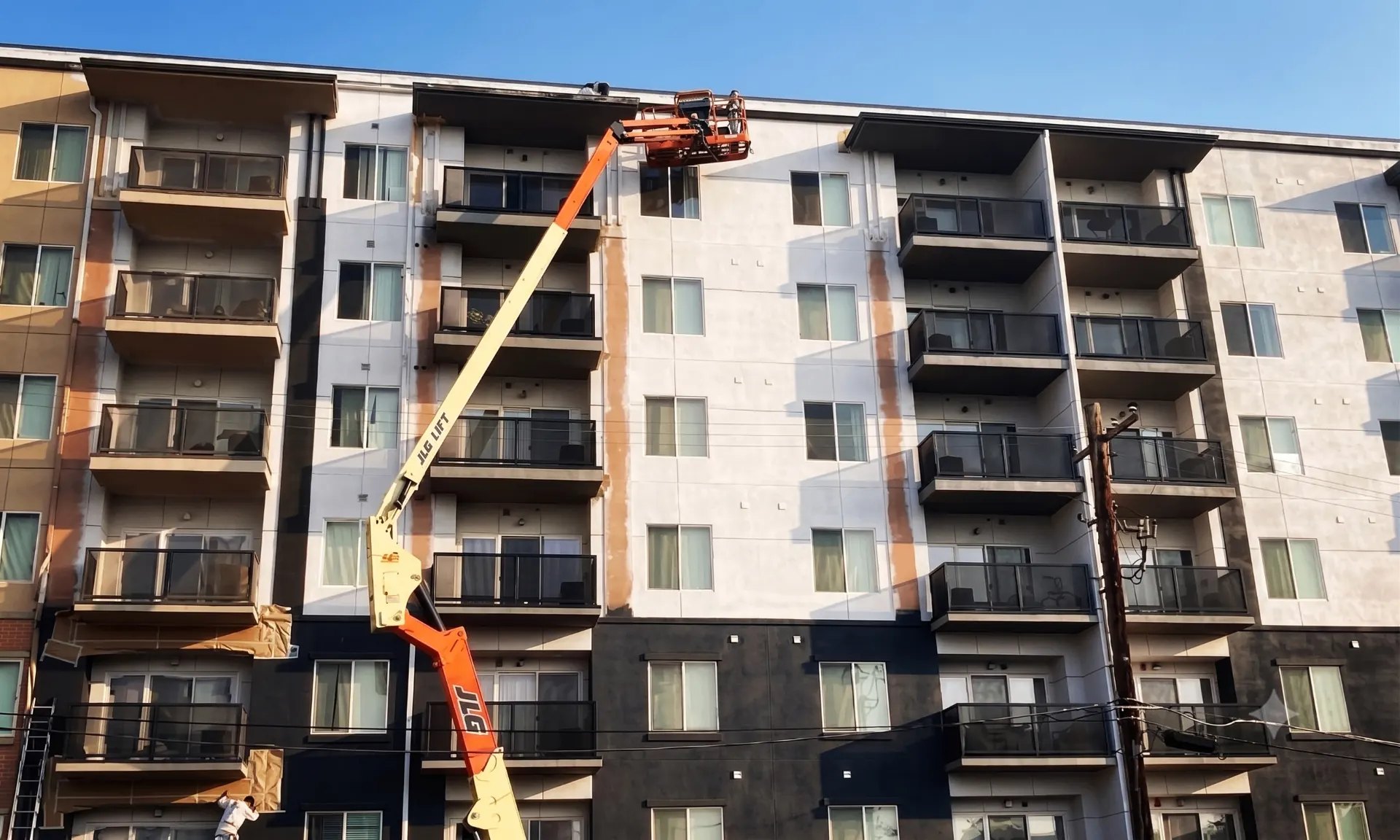
Contractor work already running.
See all client projects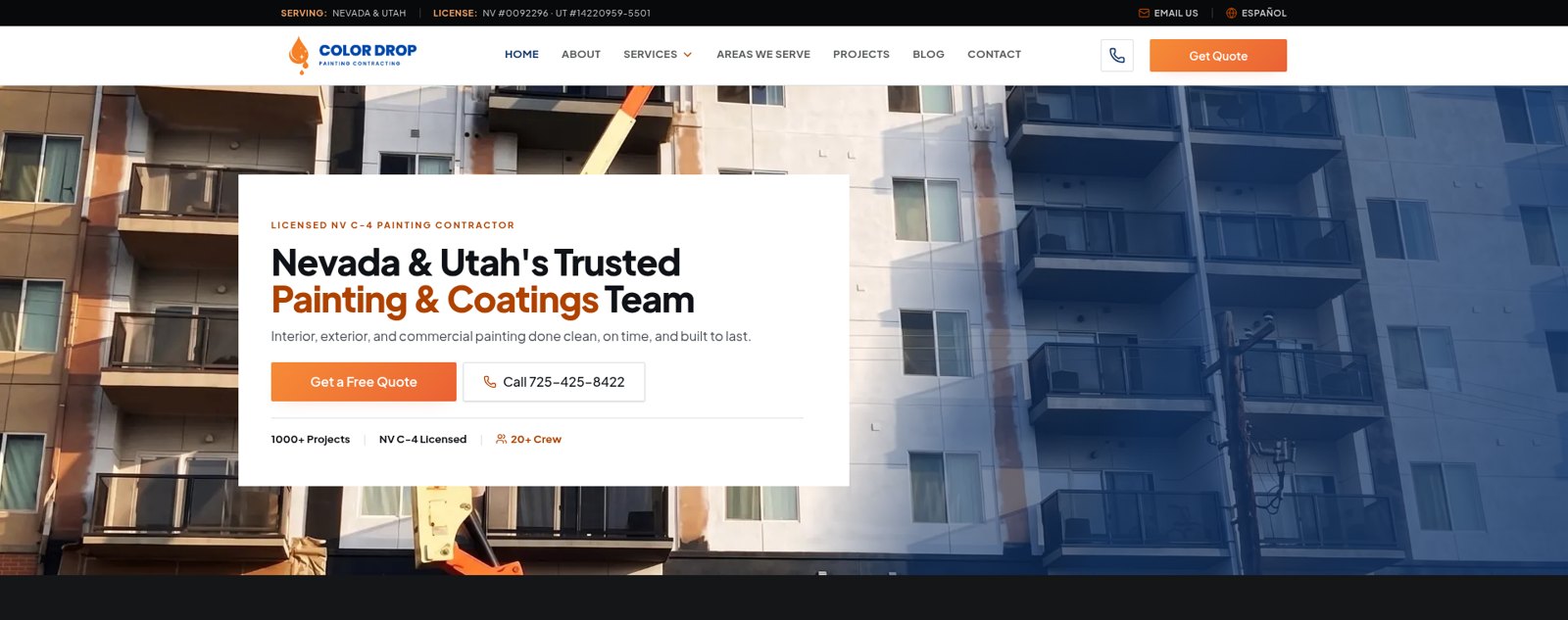
Color Drop Painting
Website and CRM connected as one lead path for a Las Vegas painting company. Proposal activity is visible on the contact record, the team is notified when a request arrives, accepted and rejected outcomes raise alerts, and the workflow was tested end to end before launch. Jobsite photography was produced by Cross X Agency for the site and for posting.
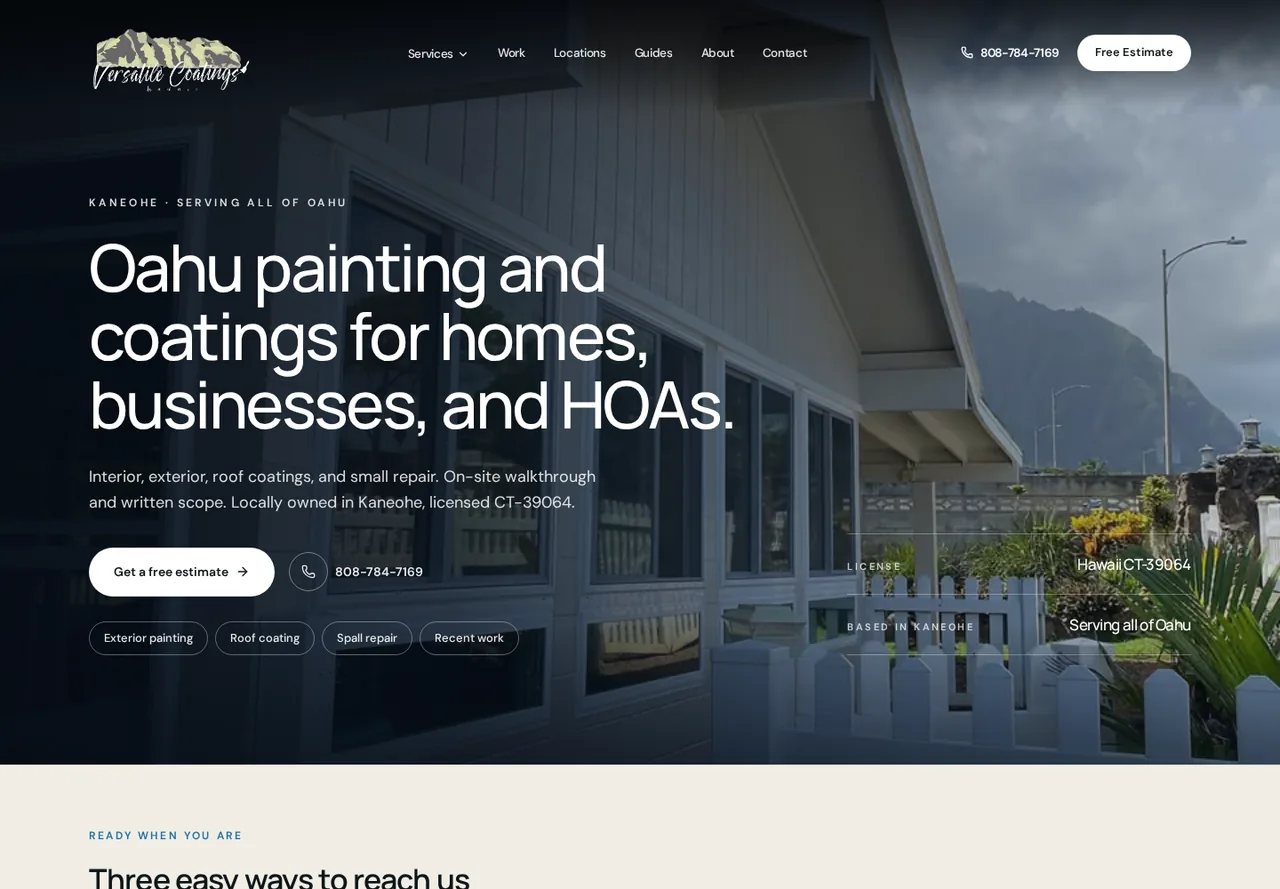
Versatile Coatings Hawaii
Website and local search work for a painting and coatings company, with the form to pipeline flow connected so an inquiry reaches the right person, the team is alerted, and the homeowner gets an immediate response instead of silence.
Hawaii. Website, local search, and lead path.

Jobsite photography produced for contractor websites, local listings, and posting.
Both companies quote their own work, so the pages, the photography, and the follow-up were built around the estimate rather than around traffic.
Where the quote goes quiet.
Most contractors do not have a marketing problem in the abstract. Interest stops moving at one specific point, and it is usually the same point.
Default
The contractor default
Nothing is broken on purpose. It is just held together by whoever happened to answer.
- One combined services page, so the company is missing from the search that matters.
- Calls ring out while the crew is on a roof or in an attic.
- A generic form collects a name and one sentence with no address area or scope.
- Requests live in a shared inbox, a notebook, and someone's text messages at once.
- Quotes sit through the weekend with nobody named as the owner.
- No one can say which channel produced the booked work.
Installed
The Cross X path
The same journey with each handoff written down, assigned, and tested before launch.
- A real page for each service, matched to how homeowners actually search.
- Missed calls answered immediately instead of returned hours later.
- Capture that asks for the service, the address area, the timing, and photos.
- One pipeline from new inquiry to booked job with a named owner per stage.
- Approved estimate follow-up running on a written schedule.
- Accepted, declined, and booked recorded against the source.
What we run for a contractor.
Six pieces of work. They can be bought separately, but they are scoped so they agree with each other instead of pulling the company in six directions.
Website
Home-service web design
One page for each service the company sells, so an exterior repaint reads as its own page instead of a bullet on a long homepage. Real project photography, the service area stated plainly, and a quote path that asks for the job and the property before anyone has to call back for basics.
Local search
SEO and local search
Homeowners search a service and a place, then compare the map results against the site. That means real service pages, a Google Business Profile that agrees with the site, and internal links that make the pages closest to a quote easy to reach.
Production
Jobsite photo and video
A homeowner buys evidence: prep, the crew working, and the finished surface. Cross X Agency captures that on planned production days and organizes the files for the site and for vertical posting. The Content Drop is one way to build that library in a batch.
Paid media
Google and Meta paid media
Search covers the homeowner who already decided and is choosing a company. Social covers the one who sees the finished work first and remembers it later. Both are read against the same tracking, so a busy phone is not mistaken for a working campaign.
Follow-up
Lead capture, CRM, and estimate follow-up
Calls, forms, and messages land in one pipeline with the source attached, get assigned to a named person, and get followed up on a written schedule rather than from memory. This is the layer most contractors are missing, and it is scoped and quoted as its own work.
Reporting
Source to booked job reporting
One view of where inquiries came from, which became estimates, and which became booked work. Accepted and declined outcomes are recorded against the source, so the next budget decision is made on revenue rather than on traffic.
The model is the same for a contractor as for anyone else. Websites start at $497 per month on a 12-month commitment, with the first month collected before the build begins, covering the agreed website, hosting, upkeep, SEO Lite, basic contacts, and an analytics dashboard. Pages and connections are confirmed in the proposal. CRM and automation, paid ads, deeper SEO, and content production are scoped and quoted separately.
Built for a specific trade.
Quoting, scheduling, and follow-up look different for an exterior repaint than for an emergency service call. Painting and HVAC are where most of the current work sits.
Painting
High estimate volume, long decision windows, and quotes that go quiet without a named owner.
Building product and home improvement brands also exhibit in Las Vegas. Booth coverage is available for both of the shows contractors and manufacturers attend.
How the work runs.
Five stages, in the order that gets closest to a booked estimate first. Nothing launches before it has been run against a real inquiry on a phone.
- Stage 01
Audit
What the company ranks for, what the site does with a visitor, what happens to a call during working hours, and where an estimate goes after it is sent.
- Stage 02
Scope
Services, locations, and proof get mapped, so pages and content are built around the jobs the company wants more of rather than everything it can do.
- Stage 03
Build
Pages, content, campaigns, and the lead system in the agreed scope, produced with real jobsite photography rather than stock.
- Stage 04
Field test
Routing, follow-up, forms, phone actions, and tracking are run against real inquiries on a phone, because that is where these installs usually fail.
- Stage 05
Launch and ownership
Launch with ownership and the next priorities written down. Accounts, files, CRM records, and workflows stay with the business.
The follow-up playbook, free to read.
The capture map, a seven-day follow-up sequence, plain-language message templates, pipeline stages, and appointment protection, written for home-service teams. It is the operating side of the install, whether or not Cross X Agency does the work.
Before you ask.
What kinds of home-service businesses does Cross X Agency work with?
Painting companies, coatings and flooring installers, HVAC, roofing, remodeling and general contracting, landscaping, and related trades. The work is built for businesses that quote their own jobs and rely on estimates turning into booked work.
Can Cross X Agency work with an existing website or CRM?
Yes. The current site, forms, phone setup, and CRM are reviewed before anything is proposed. If they can carry the work, they get cleaned up and connected. A rebuild is only recommended when the existing setup cannot support real service pages, a usable quote path, or reliable tracking.
What does the CRM and automation scope install for a contractor?
Call and form capture with the service, address area, urgency, and photos a quote actually needs, a CRM pipeline for those requests, routing to the owner or estimator responsible, missed-call and estimate follow-up, accepted and declined status, and reporting from source through to booked work. The tools in the agreed scope are what run it.
Who owns the accounts, content, and customer data?
The business does. Domains, hosting, ad accounts, analytics, CRM records, and the photo and video files stay in the company name, and the workflows are documented so the setup can be operated without Cross X Agency.
Move more real inquiries into estimates and booked work.
Send the company site and the services you want more of. You get back a plain read on what the lead path does today, which pages are worth building first, and what happens to a quote request once it arrives.