
Marketing and follow-up for painting contractors.
A painting company rarely loses work because the crew is not good. It loses work because the estimate request never reached the right person, or because a quote sat for a week while the homeowner called two other painters.
Search or referral to a signed estimate.
Six handoffs sit between a homeowner looking for a painter and a job on the schedule. The failure beside each one is what most painting companies experience as a slow month.
A homeowner starts looking
They search interior or exterior painting in their city, or they get your name from a neighbor and look you up before calling.
If nothing recent shows up, the referral quietly checks the next painter instead.
They look for work like theirs
Cabinets, exterior repaint, apartment turns, and commercial work are different decisions. They want to see the job they are about to buy.
One gallery page of mixed photos does not answer whether you do their job.
They request an estimate
The request should carry the property type, the scope, the timeline, and photos, so the estimator is not calling back to ask basics.
A name and a message box produces a request nobody can price or prioritize.
Someone takes ownership
The request lands in a pipeline with a stage and an estimator assigned, and that person is alerted while the homeowner is still deciding.
Requests sitting in a shared inbox belong to nobody and age fast.
The estimate gets followed up
Sent quotes run through an agreed sequence with intervals, wording, and a stop point, instead of depending on who remembers.
Most painting companies follow up once, then let warm quotes go cold.
The outcome gets recorded
Won, lost, or still open, on the record, with the source attached, so next quarter's spending is based on what produced work.
Without outcomes, nobody can say which lead source actually paid for itself.
What Cross X Agency can handle.
A painting company usually needs three or four of these, not all five. The audit decides which.
Service and project pages
One page per service you want more of, with the property types you take, how the work is quoted, and your own finished projects sitting next to the request form.
Local search
Page structure and headings that read as the service in the city, a Google Business Profile with current services, hours, and photos, and internal links that keep the site coherent.
Project photography and proof
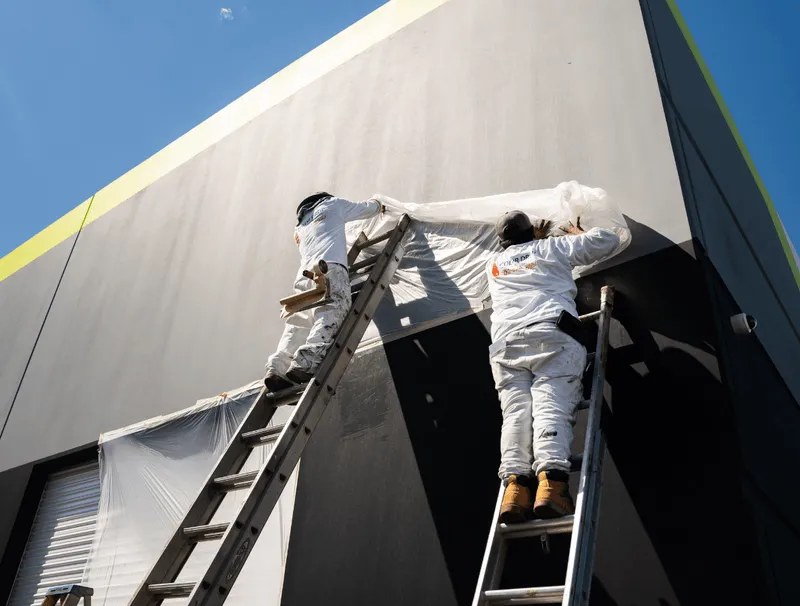
Jobsite and crew photography produced for the site and for posting, so the work a homeowner is comparing is yours and not stock imagery.
Estimate request and routing
Forms that ask for property type, scope, timeline, and photos, then route into the pipeline with the source attached and the assigned estimator alerted.
Follow-up and reporting
An agreed follow-up sequence for open estimates, plus plain reporting on where requests came from and which ones turned into signed work.
Painting work already running this way.
Color Drop Painting runs the website, the request path, and the CRM built by Cross X Agency, with photography produced on their jobsites. Versatile Coatings Hawaii runs a Cross X Agency website, CRM backend, and local search foundation.
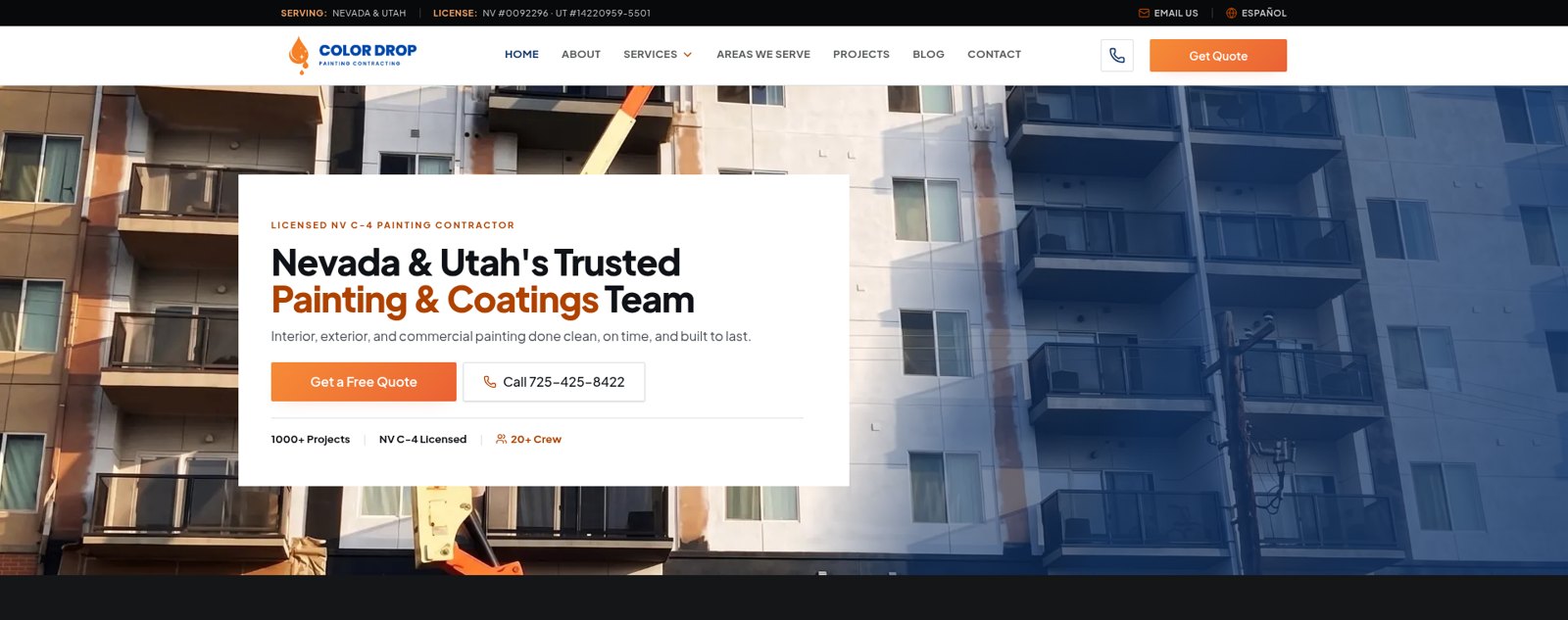
Color Drop Painting
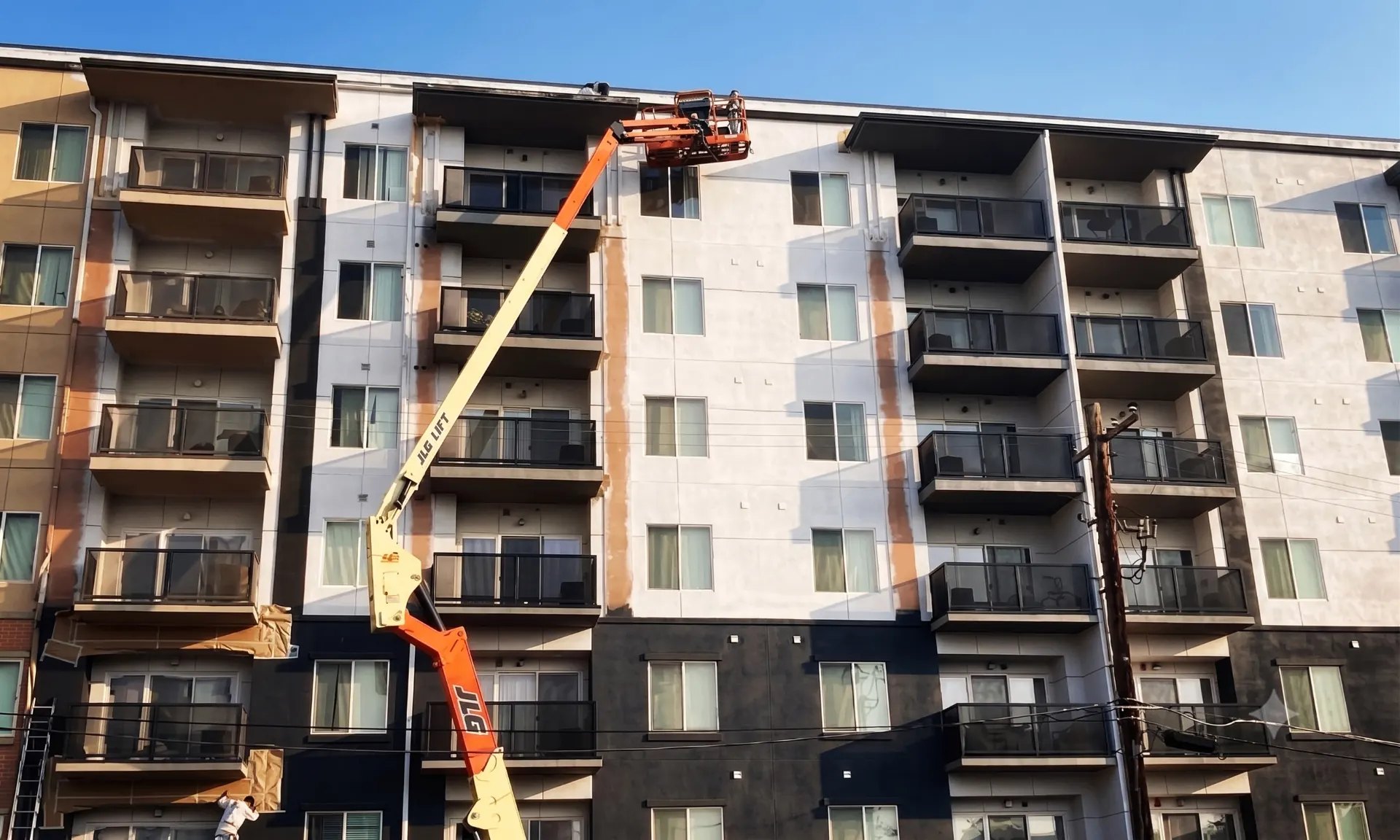
Website, service structure, and CRM installed together. Estimate requests reach a pipeline with an owner, the team is alerted when a request arrives, and accepted or rejected outcomes are visible instead of guessed. Jobsite and crew photography was produced by Cross X Agency for the site and for posting.
Las Vegas. Website, lead path, CRM, and photography.
Versatile Coatings Hawaii
Website built by Cross X Agency, with the CRM backend and the form to pipeline flow connected so an inquiry reaches the right person and the homeowner gets an immediate response instead of silence. Cross X Agency also built the initial local search foundation, and early organic-search clicks have begun to appear.
Hawaii. Website, CRM backend and lead flow, initial local search.

When the estimate path itself is the problem.
Sometimes the site is fine and the requests are coming in, and the loss is happening after that: no owner, no alert, no second follow-up, no record of the outcome. That path can be installed as one piece of work rather than patched tool by tool.
Cross X OS is the software installed underneath it: the CRM and pipelines your estimators work from, routing and alerts, automated follow-up, tracking, and reporting.
Scoped setup
Installation of the lead path: capture, routing, alerts, follow-up, tracking, and reporting, tested before launch. Scoped and quoted before anything starts.
$497 / month
Cross X OS software and lite management. If Cross X Agency operates the wider growth system, the retainer is scoped separately.
How the work runs.
We audit the current path first: what the site says, how requests arrive, who touches them, and what happens after a quote goes out. That produces a written scope. Then the pages, forms, routing, and follow-up get built and connected, tested end to end on a phone before launch, and launched with documentation of who operates what.
Accounts, data, content, and photography stay in the company's name from the start.
Before you get in touch.
Do we need a whole new website?
Not always. If the current site can carry proper service pages and a real estimate request form, it gets restructured and connected instead of replaced. A rebuild is only recommended when the platform cannot do that, and it is agreed in the scope before any work starts.
Will this work with the CRM or estimating software we already use?
In most cases yes. The current tools are reviewed first, and if a system can hold records, route requests, and report, it gets connected and repaired rather than replaced. Where nothing usable exists, the CRM layer is part of the installed lead path.
Who follows up on estimates, your team or ours?
Your team closes the work. Cross X Agency builds the sequence, the reminders, and the alerts that make follow-up happen on schedule, and defines who owns each stage so a quote is never waiting on someone remembering it.
What do we own after launch?
Everything that matters. The domain, hosting, website, analytics, customer records, and any photography or video produced for the business stay in the company's name, and the setup is documented at handoff so your team can run it.
Find out where the estimates are going.
Tell us how requests reach the company today and what happens after a quote is sent. We will map the path, show the drops, and scope only what needs to change.