
CRM and follow-up for home service businesses.
A homeowner who wants an estimate this week will call three companies and hire whoever answers with something useful first. Most contractors lose that race in the gap between the inquiry arriving and someone owning it. Cross X Agency installs the path, then maintains the software it runs on.

The estimate you never gave. That is the leak.
Referrals go to a cell phone, the website form goes to an inbox, the ad calls go wherever the phone was pointed, and by Friday nobody can reconstruct which requests never got a reply. Crews being busy is exactly when it happens most.

Requests arrive in different places
Calls, forms, messages, and referrals live in separate apps owned by separate people. There is no one list, so there is no way to tell what is unanswered.
The first reply is too slow
On a working day, a real estimate request can sit for hours. The homeowner is not waiting. They are moving down their list of three companies.
Nobody owns the follow up
An estimate goes out and nothing comes back. Without an owner and a stage, the second contact depends on someone remembering on a truck ride.
No line from source to job
Without a source on the record, you are judging ads, search, and referrals on impressions and gut feel rather than on booked work.
New inquiry to scheduled job.
The stages come from your business. What matters is that every request has an owner, a visible stage, and a next step that belongs to somebody by name.
New
A call, form, message, or referral becomes one record with a source attached and an owner assigned.
Contacted
The first real reply is logged, so speed to first contact becomes something you can see rather than something you hope about.
Estimate or inspection
The visit or walkthrough is booked into the calendar of the person who actually does it, not held in a text thread.
Quoted
The number is on the record with the scope, so the follow up is about a specific proposal.
Follow up
The reminders agreed in scope on quotes that have gone quiet, to the customer and to the owner of the record.
Won or lost
A real decision is recorded either way. Lost reasons are worth more over a year than most reporting a contractor pays for.
Scheduled
The won job reaches the schedule with a date and an owner, closing the loop back to the source it came from.
What Cross X Agency installs.
One project with a defined end. It connects the sources agreed in scope, builds the pipeline around how your company actually sells, and leaves the accounts in your name with your team trained on them.
The intake points agreed in scope
Website and landing page forms, the phone numbers you want tracked, and the message sources included in scope are connected so a new inquiry creates a record instead of living in whichever app it arrived in. Sources outside that scope are not claimed to be connected.
A pipeline that matches how you sell
Stages named after the real steps your business takes, so a glance tells you what is waiting on you and what is waiting on the customer. Stage names are set from your process, not from a template.
Assignment and routing
Every new record gets an owner. Routing rules are configured from the way your team already splits work, so nothing sits unclaimed while everyone assumes someone else picked it up.
The follow up agreed in scope
A first response, reminders on the records that go quiet, and the internal notifications your team needs. Automations are written to the sequence you approve. Anything requiring judgment stays with a person.
Calendar and estimate handoff
The point where an interested customer becomes a booked appointment, estimate, or site visit is connected to the calendar and the owner responsible for it, so the handoff is not a text message someone forgets.
Tracking, access, and training
Source to outcome reporting so you can see which sources produce work, accounts and access documented in your name, and a working session with the team that will use it every day.
The system carries the path. Your team still runs the business.
What the installed system does
It catches every inquiry from the sources in scope, puts it in one place with an owner, starts the agreed first response, reminds someone when a record goes quiet, moves the work through named stages, and reports which sources turned into real jobs.
What your team still does
Your team handles the conversations and decisions that need judgment, confirms quotes and appointments, and keeps each record current. The system gives everyone the same context and makes the next handoff clear.
Home service businesses we built systems for.
Named with the client's approval. Each line states only the work Cross X Agency actually did. No revenue, ranking, or lead volume figure is attached to any of them.
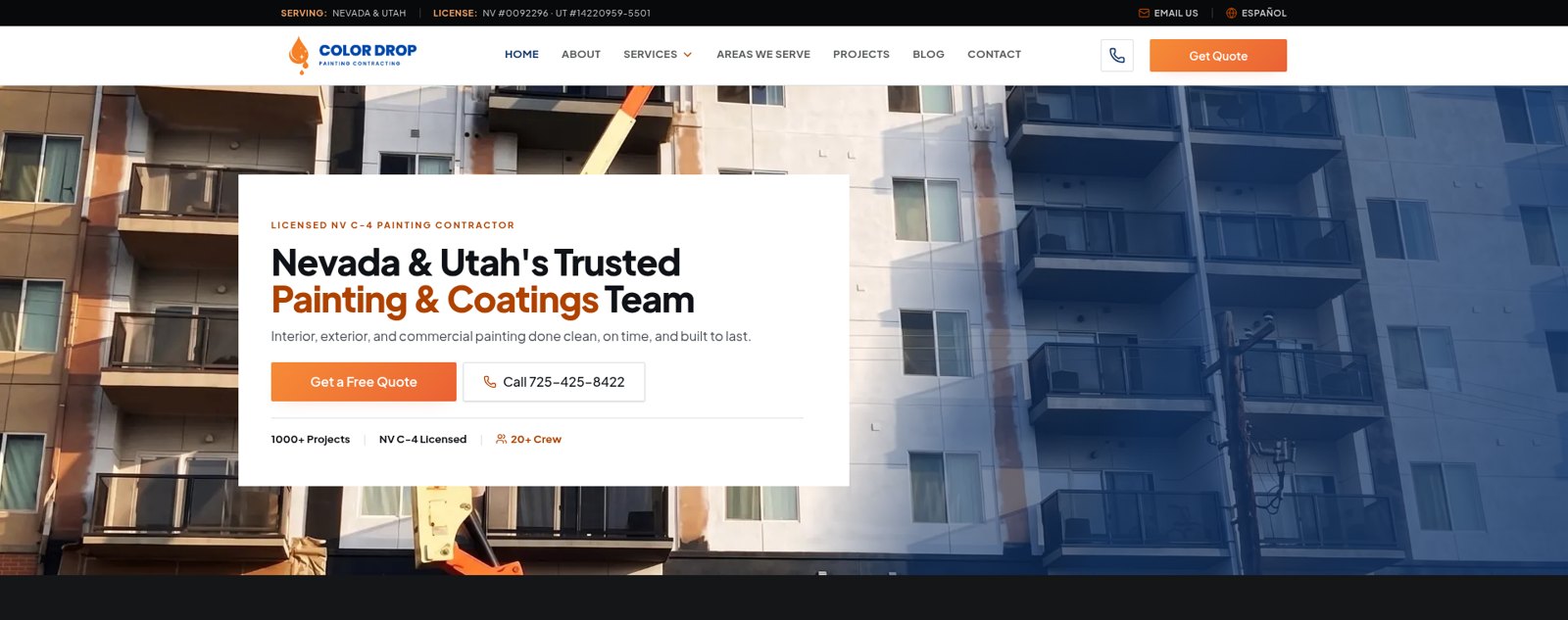
Color Drop Painting
Cross X Agency built the website and the lead path behind it, set up the CRM the estimate requests land in, and produced the jobsite and crew photography the site runs on.
Las Vegas. Website, lead path, CRM, and photography.
Versatile Coatings Hawaii
Website, CRM backend and lead flow, and an initial local search foundation built by Cross X Agency. Early organic search clicks have begun to appear.
Hawaii. Website, CRM backend and lead flow, initial local search.
Rocket Air Conditioning
Website and CRM backend built by Cross X Agency. Some video was produced as a smaller supporting part of that engagement rather than the engagement itself.
Las Vegas. Website and CRM backend, with some video.
What it costs.
Setup is scoped to the work.
What it costs depends on how many lead sources, pipelines, and automations we connect, and how much of your current setup stays. You get the scope and the number in writing before anything starts.
After launch there is a monthly amount for Cross X OS software and lite management of the installed system. If Cross X Agency also runs the wider marketing and growth work around it, that retainer is quoted for the business and is not required to keep the system running.
How the work runs.
Map the real lead path
Where inquiries arrive today, who touches them, how fast, and where they stop moving. This is a working session with the people who answer the phone, not a questionnaire.
Configure around it
Pipeline stages, owners, routing, forms, and the follow up sequence are built to match the path you described, then reviewed with you before anything goes live.
Connect and test every handoff
Forms, tracked numbers, the sources in scope, calendars, notifications, and tracking are tested with real submissions so you can see the record appear and the response fire.
Launch with the team
The system goes live with the staff who use it, working through their first real leads while we are still there, with the setup documented in your accounts.
Maintain the software
After launch, Cross X OS is maintained at the agreed lite management scope. Larger changes to the way you sell are quoted as work, not assumed.
Before you buy.
Find the estimates you are not giving.
Bring the way requests reach you today and who answers them. We will map the real path first, and tell you plainly if an installation is not what you need yet.